🍺 Kegerator & Draft Beverage Systems in Independence, MO
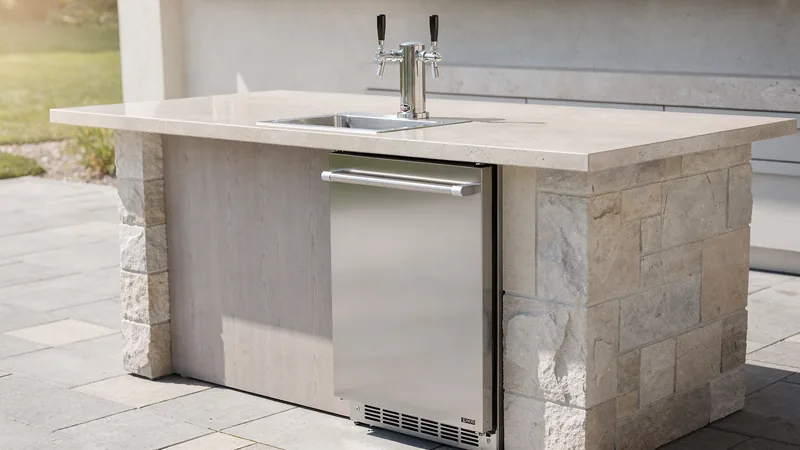
Independence Outdoor Kitchens provides kegerator & draft beverage systems in Independence, MO.
Free On-Site Estimates · Gas & Electrical Permits Handled · Licensed Gas Line Installers
A dedicated kegerator or draft system, separate from a standard beverage refrigerator.
A kegerator draws more amperage and needs different clearance and drainage than a standard under-counter refrigerator, so we plan its electrical circuit and drain line separately rather than treating it as an interchangeable beverage fridge. Single and dual-tap setups both need CO2 tank storage worked into the cabinetry, which we plan into the layout up front instead of retrofitting a gap later.
Electrical Load Planning for a Kegerator
A kegerator's compressor draws more sustained amperage than a standard beverage refrigerator, and running it on a shared circuit with other appliances risks nuisance tripping during a party when everything's running at once. We put it on its own dedicated circuit as standard practice rather than waiting for a breaker to trip to find out it was undersized.
CO2 Tank Access and Ventilation
A CO2 tank stored in a fully sealed cabinet without ventilation is a real safety concern in the rare event of a leak, so the storage cabinet needs a vent path even though it's a low-probability scenario. We build this in from the start rather than treating tank storage as just another shelf.
Frequently Asked Questions
Do I need a permit to build an outdoor kitchen in Independence, MO?
Yes — gas and electrical work on an outdoor kitchen requires separate trade permits from the City of Independence regardless of whether the structure itself needs a building permit, and adding any roof turns it into a full building permit as well. We pull all of these as part of the job.
How much does a built-in grill island cost in Independence?
There is no official Independence price list; a published U.S. guide puts a typical outdoor kitchen project at about $5,060 to $17,280, around $13,180 on average; larger kitchens with a sink, refrigerator and a covered structure cost more. The builder gives a written price after seeing the yard.
Can I add a gas line to an existing patio for an outdoor kitchen?
In most cases yes, extending from your home's existing gas service, but it requires a licensed installer and a City of Independence inspection since it's a permanent gas connection. We handle the full permit and installation as part of the job.
What areas do you serve around Independence?
Independence, Blue Springs, Grain Valley, Sugar Creek, Oak Grove, and the rest of Jackson County, MO.
My home is older — can it support a new outdoor kitchen?
Sometimes existing gas and electrical service in older Independence homes needs an upgrade before it can support new outdoor kitchen appliances. We check your home's existing service capacity during the free on-site estimate before finalizing a design.
Do you build pizza ovens too?
Yes, both wood-fired and gas-fired, either built into a kitchen island or as a standalone feature, with the venting and clearance planned correctly for the structure it's attached to.
What's the difference between a grill island and a full outdoor kitchen?
A grill island is the grill and a counter, no plumbing. A full outdoor kitchen adds a sink and refrigeration, which brings in a plumbing permit alongside the gas and electrical permits.
Can you put an outdoor kitchen on a deck?
Yes, with planning. A masonry or stone island is heavy, so the deck framing under it usually needs extra joists, beams or posts, and the grill needs a manufacturer-approved insulated jacket and clearances when it sits near wood or composite decking. Lighter options, stainless or polymer cabinets with a stainless grill, are easier on an existing deck. We check the framing before quoting, because adding weight to an older deck is where problems start.
How far should a built-in grill be from the house?
Start with the grill manufacturer's installation manual, which sets the minimum clearances to anything combustible, and keep the grill out from under low eaves, vinyl soffits and overhangs that trap heat and smoke. Many homeowners and insurers treat about 10 feet from the house as a safe target for an open grill, and fire codes require that distance at apartments and condos. If you want to cook closer, a covered structure with a vent hood rated for outdoor grills is the way to do it.
Should an outdoor kitchen be covered?
In Missouri it's worth it if the budget allows. A pergola with a solid roof or a covered patio protects appliances and countertops from summer storms and sun, lets you cook in the rain, and makes lighting, fans and a TV practical. If it isn't covered, choose fully outdoor-rated components and plan on fitted covers for the grill and refrigerator. Grills under a roof need enough height and a proper vent hood.
How long does it take to build an outdoor kitchen?
A grill island on an existing patio can take a few days of work; a full outdoor kitchen with a new slab, gas, electrical, plumbing and a roof structure usually takes several weeks. The calendar is driven by design, permits and inspections for gas and electrical work, and appliance lead times, which can stretch for specialty grills. Planning over the winter gets you cooking by late spring.
Can I build an outdoor kitchen on pavers?
A light island can sit on a well-installed paver patio, but a heavy masonry or stone island is better on a concrete slab or its own footing, because pavers over a base that wasn't designed for that load can settle unevenly and crack the countertop. Running gas, water or electrical lines also means lifting pavers, so it's easier to plan the utilities before the patio goes in.